 Race Suits


 Jackets


 Hoodies


 Shirts


 Pants


 Kids Gear


 Gloves
 Leather


Table of contents
No headings found in this article.

Ten thousand kilometres is roughly one Australian summer of commuting plus two decent tours. It is about the distance it takes to stop believing jacket marketing and start noticing what you actually reach for at 6am. Most riders who have done it end up owning two of the three materials below and feeling slightly guilty about the third.
This is the verdict by scenario, not by spec sheet. The bigger framework sits in the Summer Motorcycle Gear Australia pillar.
In this guide
- No single winner
- Mesh
- Textile
- Leather
- Comparison table
- Five rides decided
- The hybrid
- What Motrox covers
- FAQ
No Single Winner
Three questions settle it every time:
- What is the full temperature range of the ride? Not the forecast maximum. The 6am start and the 4pm storm as well.
- What speed will you hold for long stretches?
- What weather could you meet that you cannot avoid?
Mesh wins question one when the whole range is hot. Leather wins question two when the speeds are high. Textile wins question three when the answer is "anything". Pick the question that matters most for the ride in front of you.
Mesh
What it does. Moves air through the garment, not around it. On a 35°C day a mesh shirt at 60 km/h feels like a breeze. Carries CE EN 1621 armour at shoulders, elbows and back. With DuPont Kevlar® panels behind the shell, holds up in a slide at the zones that matter.
What it does not do. Keep rain out. Keep cold out below about 18°C. Pass EN 17092 as a whole garment in most cases. Match leather in a long high-speed slide.
Who it is for. The Brisbane commuter. The Sunday café rider in Sydney. Anyone who would otherwise ride in a T-shirt in February, which is most of us.
Motrox entry: the Crosswind™, $239 with Level 1 armour or $259 with Level 2. Trade-off: not EN 17092 certified. The certificate lives on the Outrider™.
Textile
What it does. Covers the widest range of conditions. A vented Cordura®-type shell with removable thermal and waterproof liners can handle a 10°C Cooma dawn and a 33°C Wagga afternoon in the same ride. Usually EN 17092 AA or AAA across the whole garment.
What it does not do. Breathe like mesh. With every vent open at 38°C it is still a jacket holding warm air against you. It is also heavy; 1.3 kg on your shoulders is noticeable by hour six.
The trap. The thermal liner stays in because removing it is a hassle. Half the textile riders sweating at the Daly Waters pub in December are wearing a winter jacket and do not know it.
Who it is for. Tourers. Adventure riders. Melbourne commuters who want one jacket for ten months of the year.
Motrox entry: the Nullarbor™. Trade-off: on a 40°C day it rides in the tail bag, not on you.
Leather
What it does. Outlasts every textile in a long slide. Perforated leather moves a surprising amount of air at speed and feels right on a 20°C morning through the Macquarie Pass. Required by most Australian circuits for track days.
What it does not do. Cope with 38°C in traffic. Cope with rain without stiffening. Fit comfortably off the bike if it is sport-cut. Cost less than $800 for anything good.
Who it is for. Sport riders. Track-day regulars. Café-racer owners for whom the look is part of the point. Riders whose crash scenario is a 130 km/h lowside, not a 50 km/h drop.
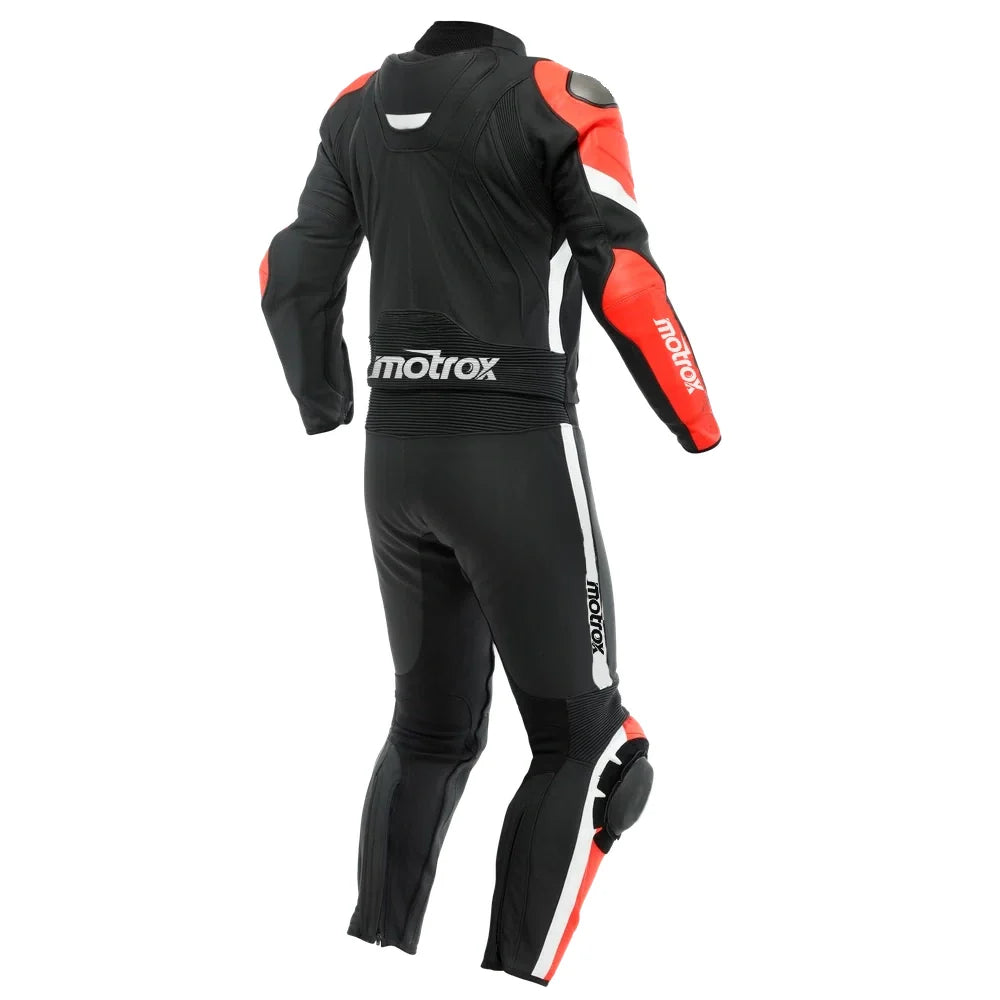
Motrox entry: made-to-measure leather jackets and leather suits, cut to your measurements with CE armour. Trade-off: six-week lead time, and leather is the wrong garment for a 38°C commute however well it fits.
Comparison Table
| Mesh shirt | Vented textile | Perforated leather | Plain-English verdict | |
|---|---|---|---|---|
| Airflow at 35°C+ | Maximum | Moderate | Low to moderate | Mesh, by a wide margin |
| Slide protection | Kevlar® zones + CE armour | AA–AAA whole garment | AAA capable | Leather, then textile |
| Weight with armour | 500–700 g | 1,100–1,500 g | 1,400–1,800 g | Mesh; textile fatigues shoulders |
| Rain | None | Good with liner | Poor | Textile only |
| Cold | Fails below 18°C | Handles 5°C with liner | OK to 10°C | Textile |
| Entry price (AUD) | $230 | $400 | $800 | Mesh |
| Lifespan | 3–5 summers | 5–8 years | 10+ years | Leather, if you look after it |
| Belongs | Commute, café, 30°C+ | Touring, mixed weather | Sport, track, cool mornings | Depends on the ride |
Five Rides Decided
1. Parramatta to the CBD, daily, December to February
Mesh. 25 km, mostly 50–70 km/h, 30°C+ by 8am. Crosswind™ with Smooth Ways Level 1 and Stockman™ jeans. Textile is a sauna in the Harbour Tunnel queue. Leather is absurd.
2. Sydney to Melbourne via the Hume and the High Country, three days in January
Textile, with mesh in the bag. Cooma at 9°C, Albury at 36°C, a storm somewhere near Mansfield. The Nullarbor™ does the mornings and the weather; the Crosswind™ comes out for the hot middle of each day.
3. Oxley Highway, Saturday, pace on
Leather if you are serious, mesh with Flying Bats if you are not. Walcha at 14°C in the morning, Wauchope at 30°C by lunch, 200 km of corners in between. If the ride is about the corners, perforated leather and the slide protection that goes with it. If the ride is about the coffee at Gingers Creek, Crosswind™ with Flying Bats Level 2 for the extra coverage.
4. Nullarbor, January
Mesh plus a packable textile shell. The Plain at 42°C needs mesh. The dawn start out of Norseman at 12°C needs something over it. One garment cannot do both; two can. The full route guide is here.
5. Phillip Island track day, February
Leather. Not a discussion. The circuit will not let you out in anything else, and the physics agree with the circuit.
The Hybrid
Most riders who ride a lot end up here without planning it.
Commute plus tour: mesh shirt for the week, textile for the trips. $240 plus $500 covers more real riding than a single $900 jacket that is mediocre at both.
Commute plus sport: mesh shirt Monday to Friday, leather on Saturday. Each one perfect at its job.
The tail-bag rule: on any summer ride over 300 km, carry a packable textile or rain shell. Four hundred grams in the bag solves the one storm and the one cold morning that make mesh-only riders nervous.
The cost is owning two garments. The benefit is never wearing the wrong one.
What Motrox Covers
| Need | Motrox product | Trade-off |
|---|---|---|
| Hot-day mesh | Crosswind™ | Not EN 17092 certified |
| Certified shirt | Outrider™ flannel, EN 17092 AA | Warmer than mesh |
| Cool-start layer | Vanguard™ hoodies, EN 17092 AA | Not a midday garment |
| Touring textile | Nullarbor™ | Too warm above 38°C |
| Sport and track leather | Leather jackets and suits, made to measure | Lead time; too hot for summer commuting |
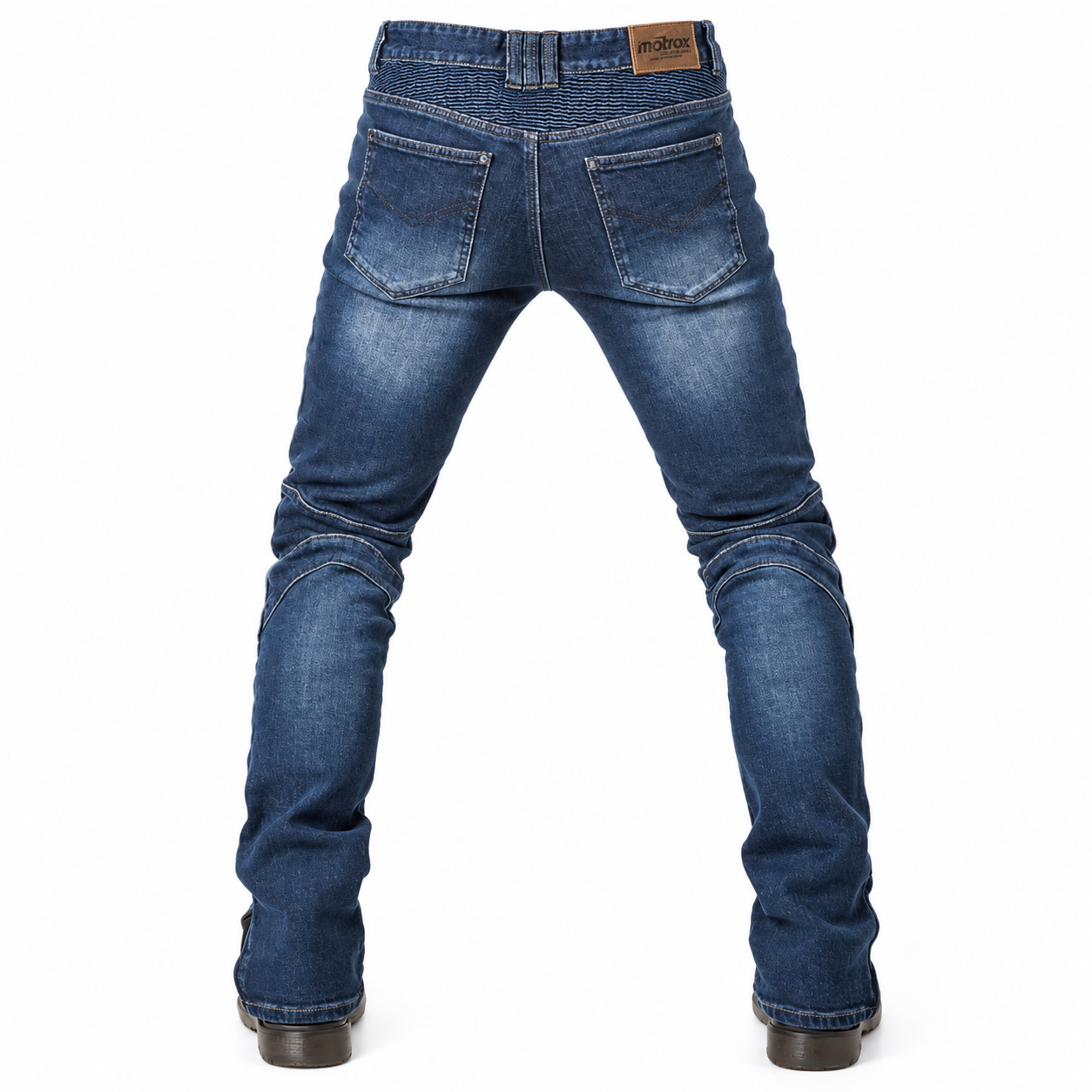
| Lower half | Stockman™ jeans | Less airflow than mesh pants |
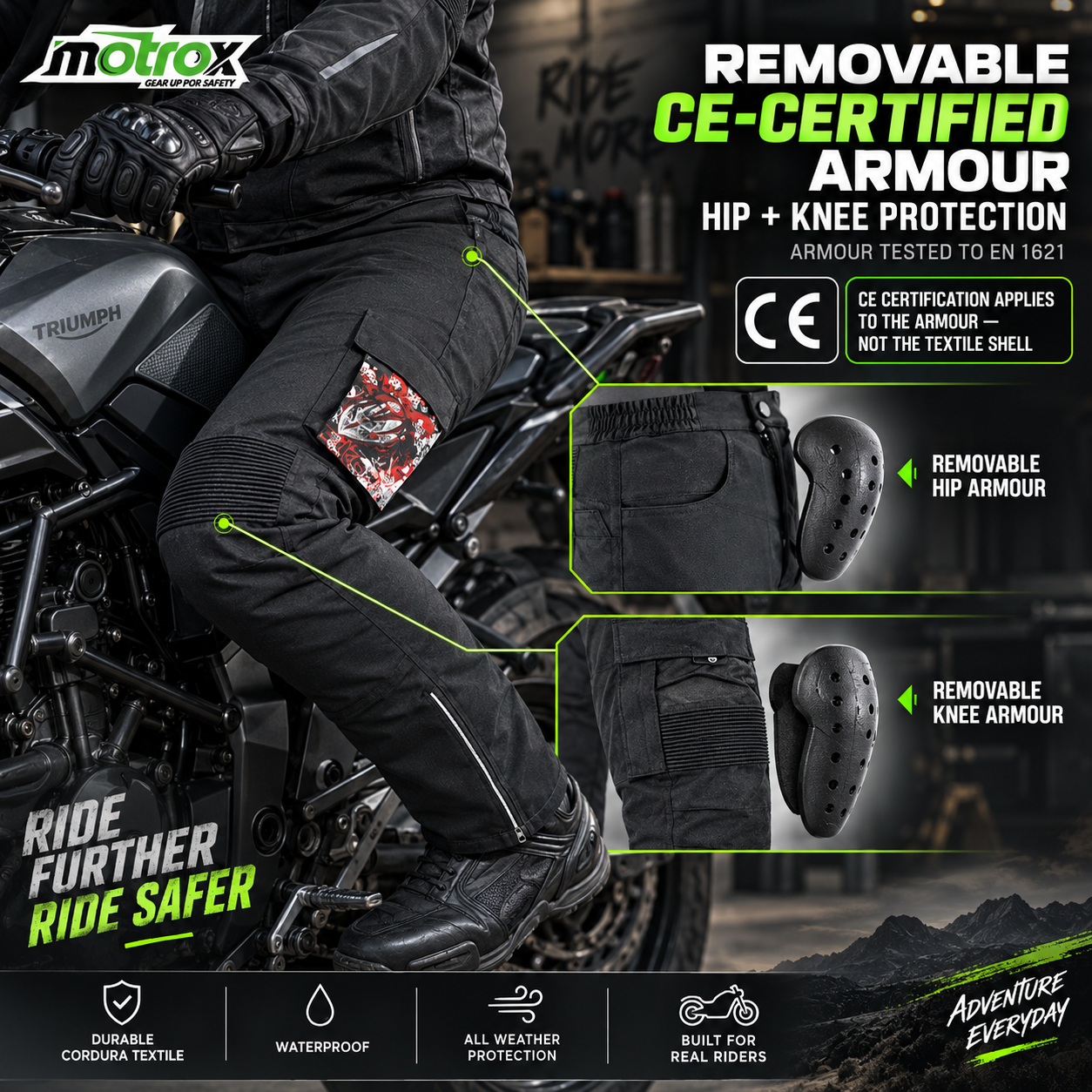
Which armour goes in which shirt is covered in the Motrox CE Armour Guide.
From the road
Bells Line of Road, early December, 7am. Rider in a full textile jacket with the liner in because it was 11°C at Richmond. By Lithgow it is 24°C and the vents are open. By the time he turns around at Bathurst it is 34°C and he is riding with the front zip undone, which is the worst of both: no airflow and no protection. The mesh shirt was at home. It now lives in the tail bag, permanently, and the textile has not had the liner in since September.
FAQ
Is mesh safer than textile?
Neither is categorically safer. In a 50 km/h drop, a mesh shirt with Level 2 armour at all three positions beats a textile jacket with no back protector. In a 120 km/h slide, a certified textile beats mesh. The honest answer depends on which crash you are planning for.
Can I tour long distance in mesh?
In hot climates, yes, and plenty of riders do the Stuart Highway in nothing else. Where the ride includes cold mornings or likely rain, carry a shell. Mesh alone across the High Country in January will have you cold by 7am and wet by 4pm.
Why do people still ride in leather when mesh exists?
Because leather slides longer than anything else, and for sport and track riding the slide is the crash that matters. It is also the only material most circuits accept. For a city commute, those advantages are irrelevant.
Will a mesh jacket work in winter?
No. Below about 18°C the airflow becomes the problem. Winter is textile with the liner in, a Kevlar® hoodie, or leather with a thermal layer underneath.
Is textile gear waterproof?
With the liner in, mostly. The vents and the collar are the weak points in a real downpour. A dedicated rain shell over the top is more reliable than any "waterproof" jacket in a Queensland afternoon storm.
Is a mesh shirt enough protection?
For urban and suburban riding with CE Level 1 or 2 armour at shoulders, elbows and back, it protects against the injuries that actually happen at those speeds. It is not a certified garment, and it is not what you want on for a sustained highway slide.
Which lasts longest?
Leather, by years. A well-kept leather jacket outlives two textile jackets and three mesh shirts. Mesh is the shortest-lived because polyester and UV do not get on.
What is the best motorcycle gear for an Australian summer?
Mesh for the hot months, textile for the shoulder seasons and the weather, leather if you ride at pace. If you can only buy one, textile. If you can buy two, mesh and textile. The pillar guide covers every state.
Buy for the ride you do most. If that is a hot commute, start with the Crosswind™ and put a $150 rain shell in the bag. If that is touring, start with textile and add the mesh for January. Either way, use MOTROX10 at checkout for 10% off.
Shop the Crosswind™ → · All Motrox shirts → · Free sizing guide →
Popular with riders


- CE armour

- CE armour
- Kevlar®

- CE armour

- CE armour
- Made to measure