 Race Suits


 Jackets


 Hoodies


 Shirts


 Pants


 Kids Gear


 Gloves
 Vests


Table of contents
No headings found in this article.

Two o'clock, early February, Pacific Highway between Grafton and Ballina. The dash says 39°C. The road is darker than the sky and throwing heat back up at your knees. You opened every vent on the textile jacket an hour ago and it made no difference, because the air coming through them is hotter than you are. One bottle of water since Coffs. Next servo in 45 km.
Nothing about that ride is unusual. It is just what January and February do to a rider who kitted up for Europe.
This guide to summer motorcycle gear in Australia is the fix. It covers what mesh gear is and is not, which of mesh, textile and leather wins in which Australian conditions, how CE armour works, what to wear in Darwin versus Mildura versus Thredbo, how to survive the Nullarbor in summer, and why fit matters more than fabric. Every Motrox™ product mentioned carries one honest trade-off. Nothing here is padded.
In this guide
- Why Australian summer riding is harder than anywhere else
- What a mesh motorcycle shirt actually is
- Mesh vs textile vs leather: the honest verdict
- Is mesh safe? The CE armour reality
- Motrox armour systems: Smooth Ways, Flying Bats, Keep Tech, D3O®
- Layering for extreme heat
- Regional gear guide
- Long-distance summer riding
- Choosing the right summer shirt for your ride
- Fit and sizing
- Care, cleaning and lifespan
- Summer motorcycle gear Australia: the Motrox lineup
- FAQ
Why Australian Summer Riding Is Harder Than Anywhere Else
The numbers. Bureau of Meteorology long-term climate averages put the mean January maximum at roughly 26°C for Sydney (Observatory Hill), 29°C for Brisbane, 32°C for Darwin, 31°C for Perth and 36°C for Alice Springs. Averages flatter the bad days. Western Sydney, Mildura, Port Augusta and Katherine all post 40°C+ runs most summers, and Sydney, Melbourne, Adelaide and Perth all have official records above 45°C.
UV. The Bureau's UV index hits 11+ ("extreme") on clear summer days across the mainland. Forearms left bare on a two-hour ride will burn. Cancer Council Australia's guidance is to cover up whenever the index is 3 or above. In January it is above 3 by 8am.
Radiant heat from the road. Dark bitumen in 40°C air routinely measures above 60°C at the surface. You ride inside a column of rising heat. Sportbike riders cop it worst: knees against a hot engine, torso over a hot tank.
The wind-chill myth. Skin sits around 34–35°C. Below that air temperature, wind cools you by stripping sweat. Above it, wind does the opposite: it blows hot air across you faster than your sweat can evaporate. On a 42°C day at 110 km/h you are being heated by the breeze. This is why Territory riders slow down through the middle of the day rather than trying to outrun the heat.
Dehydration and judgement. Sports-medicine research puts the point where reaction time and decision-making measurably decline at around 2% of body weight lost in fluid. For an 85 kg rider that is 1.7 litres. On a 40°C day you can lose that in 90 minutes without noticing. Transport for NSW lists fatigue as one of the main contributors to rider casualties, and heat is the fastest route to fatigue there is.
The point: Australian summer riding needs gear built for the climate. Not a European three-season jacket with the liner out.
What a Mesh Motorcycle Shirt Actually Is
Strip one apart and you find three layers doing three different jobs.
The shell. Open-weave polyester mesh, around 350–370 grams per square metre on the Crosswind™. The holes are the point. At 60 km/h air passes through the fabric rather than around it. You feel it on your chest and back within seconds of moving.
The reinforcement. Panels of genuine DuPont Kevlar® aramid fibre sewn behind the shell at the places that hit the road first: shoulders, elbows, flanks. Aramid resists abrasion far longer than cotton, denim or plain polyester. "Kevlar" means DuPont Kevlar®. Generic aramid without the DuPont licence is a different product with a different spec.
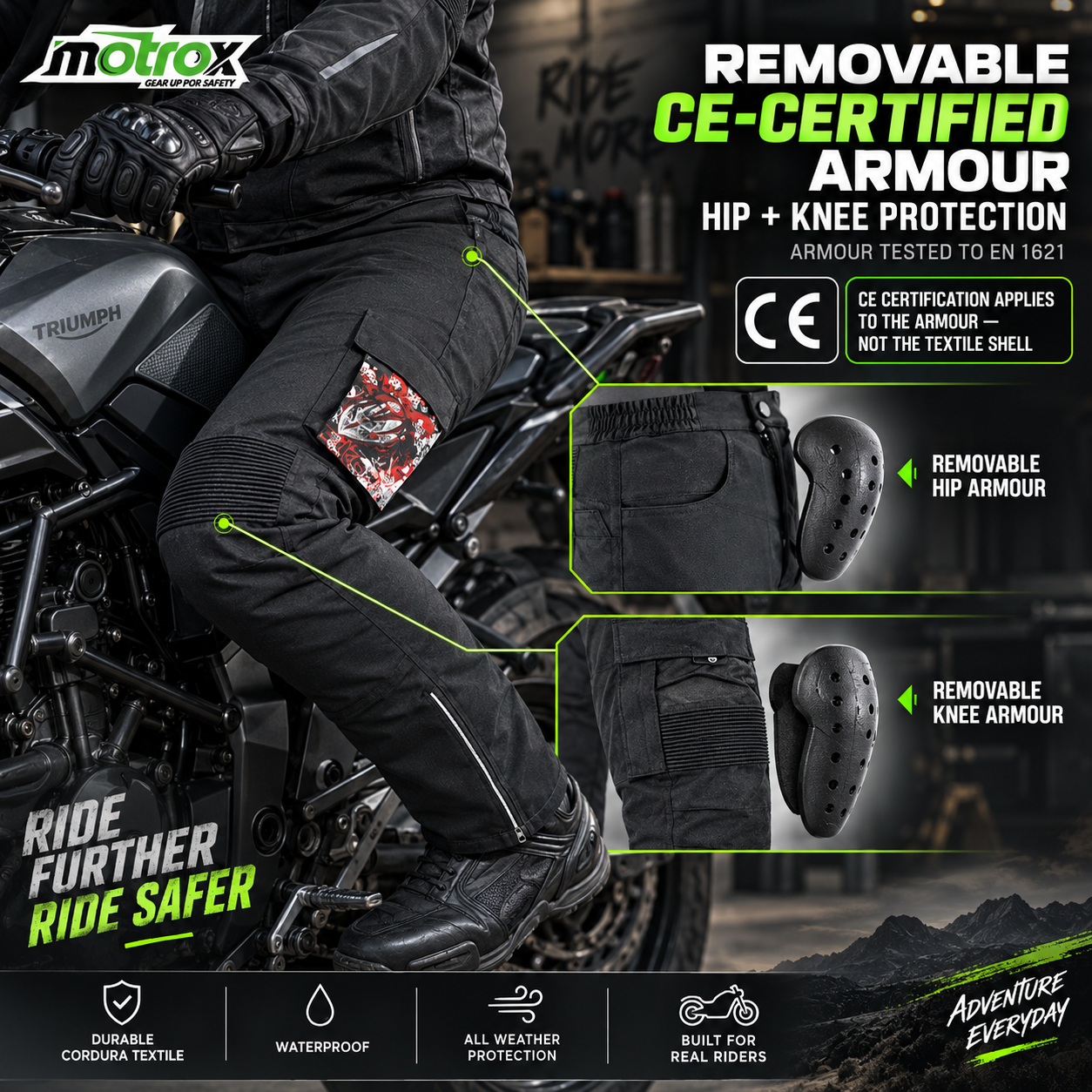
The armour. Removable impact protectors certified to CE EN 1621, sitting in pockets at the shoulders, elbows and back. This is the layer that stops a fracture. The shell and Kevlar® handle the slide. The armour handles the hit.
What a Kevlar® lining does and does not do
Kevlar® panels buy you time on the ground at the spots they cover. That is real protection.
What they do not do is make the shirt a certified garment. EN 17092 tests the whole garment, every panel, on an abrasion rig. A shirt with Kevlar® at the shoulders and open mesh across the lower back cannot pass as a complete garment. The Crosswind™ does not claim to. It is DuPont Kevlar® lined with CE EN 1621 armour inserts, and that is exactly how Motrox describes it on the product page.
If you need a certified garment in a shirt cut, the Outrider™ Kevlar® Armoured Flannel Shirt holds EN 17092 Class AA. It is warmer. That is the trade.
Why mesh is the honest answer above 30°C
Your body has one cooling system: sweat and evaporation. Mesh lets it run. A sealed textile jacket, even with every vent open, holds a layer of warm damp air against your torso. Ride both on the same 35°C afternoon and you arrive comfortable in one and wrung out in the other.

From $239 with CE Level 1 armour, $259 with Level 2. Back protector included. 15 colours, 20 sizes XS–8XL plus tall. Ships free Australia-wide in 15–19 business days.
Shop the Crosswind™ → Code MOTROX10 for 10% off
Mesh vs Textile vs Leather in Australian Heat: The Honest Verdict
Protection and comfort
| Garment | Airflow | Abrasion protection | Weight with armour |
|---|---|---|---|
| Mesh shirt | Maximum | Kevlar® panels + CE armour; rarely garment-certified | 500–700 g |
| Mesh jacket | High | Often EN 17092 A or AA | 1,000–1,300 g |
| Vented textile | Moderate | EN 17092 AA to AAA | 1,100–1,500 g |
| Perforated leather | Moderate | AAA capable | 1,400–1,800 g |
Use, price and the catch
| Garment | Weather range | Price (AUD) | Where it belongs | The catch |
|---|---|---|---|---|
| Mesh shirt | Hot days only | $230–$300 | City commute, café runs, any 30°C+ day | Useless below 18°C or in rain |
| Mesh jacket | Hot and warm | $300–$550 | Hot-weather commuting, 100 km days | Heavier, still no rain protection |
| Vented textile | Three seasons | $400–$800 | Touring, adventure, changeable weather | Never cool enough above 35°C |
| Perforated leather | Cool to warm | $450–$1,200 | Sport, track, café-racer | Cooks you in traffic, hates rain |
When leather still wins. Track days. Sustained sport pace on the Oxley or the Putty. Cool mornings where the perforations breathe just enough. Nothing slides longer than leather.
When textile wins. Spring and autumn. Multi-day tours that start at 12°C in Cooma and end at 34°C in Wagga. Riders who want one jacket to be adequate at everything.
When mesh wins. Any day above 28°C. Any summer commute. Any ride where the alternative is a T-shirt, which for most Australian riders is the real alternative.
The lived-in version of this comparison, with five real scenarios decided, is in Mesh vs Textile vs Leather in 40°C.
Is Mesh Safe? The CE Armour Reality
EN 17092 in one paragraph
EN 17092 is the European garment standard. It rates a whole jacket or shirt into Class A (basic), AA (most road riding) or AAA (high speed) based on how long each zone survives an abrasion test, plus seam strength and tear resistance. Most mesh shirts cannot pass because open mesh fails at the lower back and flanks. A few premium mesh jackets with dense ballistic weaves do pass A or AA. Ask any seller claiming "CE mesh shirt" for the certificate for that exact product. Australia's own MotoCAP program also rates jackets independently and is worth checking before you buy anything. No Australian state mandates certified clothing for adult riders, but the rules on helmets, gloves and pillions vary; they are in Motorcycle Gear Laws Australia 2026.
Why armour matters more than shell fabric at city speeds
At 50 km/h you do not slide far. You hit. Shoulder, elbow, hip, back, in some order, in about a second. Armour is what stands between those hits and a fracture. Shell fabric earns its keep later, at highway speed, where the slide is long enough to wear through cloth.
So a mesh shirt with Level 2 armour at shoulders, elbows and back is better protection in a 50 km/h drop than a textile jacket whose owner never bought the back protector. Above 100 km/h for long stretches, the equation shifts back toward certified shells.
Level 1 vs Level 2
EN 1621 measures how much force passes through the protector when it is struck with a 50 joule impact.
| Protector | Level 1 | Level 2 |
|---|---|---|
| Shoulder / elbow (EN 1621-1) | Average ≤ 35 kN, no single hit over 50 kN | Average ≤ 20 kN, no single hit over 30 kN |
| Back (EN 1621-2) | Average ≤ 18 kN, no single hit over 24 kN | Average ≤ 9 kN, no single hit over 12 kN |
Lower is better. Level 2 lets through roughly half the force of Level 1 at the back. The trade is thickness and firmness. Commuting under 70 km/h, Level 1 is defensible. Anything faster, Level 2. The full test data and the "is Level 2 worth $20" argument are in CE Level 1 vs Level 2 Motorcycle Armour.
Where armour goes, and the one piece you do not skip
Shoulders, elbows, back. All three, every ride. A back protector is the cheapest insurance in motorcycling and spinal injuries are among the most life-changing outcomes in crash data. Any $230+ mesh shirt sold without one in the box is asking you to pay extra for the part that matters most. Chest protectors (EN 1621-3) are a worthwhile add-on; the Crosswind™ does not ship one but aftermarket inserts fit.
Motrox Armour Systems: Smooth Ways, Flying Bats, Keep Tech & D3O®
The Crosswind™ ships with your choice of armour. Every option is CE EN 1621 certified and covers shoulders, elbows and back, and the back protector is included in the price on every option. The shirt is the same. The armour is the decision.
Smooth Ways

Slim-profile CE armour, Level 1 or Level 2. Sits flat enough that the shirt looks like a shirt when you walk into the café. Cheapest option.
Best for: commuters, riders who wear the shirt off the bike, first-time armour buyers.
Trade-off: less coverage area at the shoulder and elbow than Flying Bats. Same CE level, smaller footprint.
Flying Bats

Higher-coverage CE Level 2 armour in Black, Orange or Red. The colour shows through the mesh, so you pick whether the armour hides or announces itself.
Best for: weekend sport riders, adventure riders, anyone who wants more protector area.
Trade-off: more mass, more visible under a jacket, slightly warmer against the body.
Keep Tech

Dual-density CE Level 2 foam. Softer when you are sitting on the bike, firmer when it takes a hit. Built for the fourth hour of a long day when ordinary foam starts to feel like a shin pad on your shoulder.
Best for: tourers doing 400 km days, adventure riders on multi-day loops.
Trade-off: costs more than Smooth Ways for the same Level 2 rating. You pay for comfort, not extra certification.
D3O® (available on request)
D3O® is a licensed shear-thickening polymer. Soft and flexible at rest; on impact the molecules lock and the material goes rigid, then relaxes again. It is the material most premium European brands use.
Genuine licensed D3O® is available on the Crosswind™, Outrider™ and Vanguard™ now on request, ahead of its official launch in the range. Ask for it on the 24/7 chat when you order.
Trade-off: it costs more than Keep Tech. If you commute, Smooth Ways Level 2 already gives you the certification; D3O® adds comfort behaviour, not a different rating.
To order with D3O®, ask on the 24/7 chat when you place your order.
Decision matrix
| Rider type | System | Level |
|---|---|---|
| City commuter | Smooth Ways | 1 or 2 |
| Weekend sport rider | Flying Bats | 2 |
| Long-distance tourer | Keep Tech | 2 |
| Adventure / dual-sport | Flying Bats or Keep Tech | 2 |
| Comfort-first daily rider | D3O® (on request) | 2 |
All four systems share the same pockets, so you can start with one and swap to another later without buying a new shirt. Full write-ups, upgrade paths and replacement intervals: The Complete Guide to Motrox CE Armour.
Layering for Extreme Heat
The shirt is most of the answer. The rest decides whether you are still thinking straight at 3pm.
Base layer. Merino, 150–200 GSM. It wicks, it does not stink on day three, and it manages moisture in humidity better than cotton. In Darwin or Cairns, a phase-change cooling base layer beats merino at the top of the range. Dry cotton under mesh is the one thing to avoid: it soaks, clings and blocks airflow.
Hydration. Two litres minimum on any 35°C day, three on 40°C. A bladder pack with the bite valve tucked inside the collar means you drink without stopping. Add an electrolyte sachet every two hours. Plain water in volume dilutes blood sodium; the resulting hyponatraemia looks like heat exhaustion and is treated differently.
Cooling vests. Evaporative (soak and wear) for dry heat: Alice, Mildura, the Pilbara. Phase-change (frozen inserts) for humidity: Brisbane, Cairns, Darwin in the wet. Wrong vest in the wrong climate does nothing. The regional breakdown is in Dry Heat vs Tropical Heat.
Neck tube. Soaked and worn under the helmet it cools the blood running through your neck. Under $20 at BCF.
Gloves. Short, perforated, CE EN 13594 Level 1 with knuckle protection. Winter gauntlets in January are a mistake you make once.
Boots. Short vented touring boots or riding shoes with ankle protection. Motocross boots on a Sydney commute are a sweat box.
Helmet. Multi-vent lid, light colour if you can stand it. A clear visor with a Transitions-style insert, or a dark visor you swap at dusk, cuts squint fatigue over long days. Replace anything older than five years; the vents are not the only part that degrades.
The schedule, hydration maths and roadside cool-down routine for 40°C+ days are in Riding in 40°C: The Australian Survival Guide.
Regional Gear Guide
Australia is six climates with one flag. Gear for the one you are in.
Queensland coast and Far North (humid tropical)
Brisbane to Cairns. 30–35°C with humidity that stops sweat evaporating. Mesh is mandatory; the phase-change vest is the highest-value addition you can make. Afternoon storms from October to April. Rain shell in the tail bag.
Stack: Crosswind™ + phase-change vest + merino base + 3L hydration + packable rain jacket.
Northern Territory (dry extreme heat)
Katherine, Tennant Creek, Alice. 40°C+ is normal from October. Dry air means evaporative cooling works brilliantly: a wet cotton T-shirt under the mesh gives you 30–40 minutes of real cooling. Shade is scarce, so every stop is planned around it.
Stack: Crosswind™ + wet under-layer + evaporative vest + 3L hydration + hat for stops.
Western Australia northwest (remote and hot)
Pilbara, Kimberley, Great Northern Highway. Same dry heat as the Centre, with fewer people and longer gaps. Redundancy matters: spare visor, spare gloves, spare shirt, satellite messenger.
Stack: Crosswind™ + Outrider™ as backup + evaporative vest + 3L hydration + satellite messenger.
NSW and Victoria coast (variable)
Sydney, Newcastle, Wollongong, Melbourne. Mornings at 18°C, afternoons at 34°C, a southerly change by 5pm. Mesh for the day, packable shell for the change.
Stack: Crosswind™ + merino base + packable waterproof over-jacket.
SA and inland Victoria (dry days, cool nights)
Mildura, Renmark, the Mallee. 42°C at 3pm, 15°C at midnight. Layer: Vanguard™ hoodie over merino at dawn, down to the Crosswind™ by 10am, hoodie back on after dark.
Stack: Crosswind™ + Vanguard™ hoodie + merino base.
Snowy Mountains and highlands (summer with teeth)
Jindabyne, Khancoban, Oberon. 25°C at lunch, 5°C at 5am. Mesh alone will have you shaking by Dead Horse Gap. The hoodie layer is what makes alpine summer work.
Stack: Crosswind™ + Vanguard™ hoodie + merino base + warmer gloves for the morning.

From $239 with CE Level 1 armour, $259 with Level 2. Back protector included. 15 colours, 20 sizes XS–8XL plus tall. The shirt in every stack above.
Shop the Crosswind™ → Code MOTROX10 for 10% off
Long-Distance Summer Riding
Nullarbor in January. Perth to Adelaide, 2,700 km, roadhouses 100–200 km apart, no shade on the Plain. Ride 5–11am, hide, ride 4–7pm. Six litres of water on the bike every day. Evaporative vest, refreshed at every roadhouse.
Stuart Highway, Darwin to Alice. 1,500 km of straight bitumen through two climates: wet-season humidity at the top, dry furnace in the middle. Carry both vest types and switch at Katherine.
Tasmania. 4°C in the Central Highlands at dawn, 30°C in Hobart by 2pm, in the same January day. Mesh for the lowlands, hoodie for the first two hours.
Pack list for any 500 km+ summer day: 3L hydration (frozen overnight), 2L spare water, electrolyte sachets, spare clear visor, packable rain jacket, SPF 50+ sunscreen reapplied at every fuel stop, route plan with water stops marked.
The full checklist, mechanical heat issues and emergency plan: Nullarbor & Stuart Highway in Summer.
Choosing the Right Summer Shirt for Your Ride
| You ride | Crosswind™ armour | Pair it with |
|---|---|---|
| Sydney, Brisbane or Perth commute, under 60 km, 30–70 km/h | Smooth Ways Level 1 or 2 | Stockman™ Kevlar® jeans, short gloves |
| Weekend B-roads at pace | Flying Bats Level 2 | Leather or textile pants, gauntlet gloves |
| 500 km touring days | Keep Tech Level 2 | Nullarbor™ jacket in the bag, 3L hydration |
| Adventure, mixed surface | Flying Bats or Keep Tech Level 2 | Adventure boots, chest protector add-on |
Fit and Sizing: Why It Matters for Safety
Mesh gear fails on fit more than on construction.
Too loose and the armour moves. A Level 2 back protector that ends up 10 cm off your spine protects whatever is 10 cm off your spine. Too tight and the mesh is pressed flat against your skin, which kills the airflow you bought it for.
The target is close through the shoulders and chest, enough room at the waist for the armour and the riding position, sleeves that end at the wrist with your arms on the bars.
How to get the size right
The Crosswind™ comes in 20 standard sizes, XS to 8XL plus a tall cut, so the fit is there; the job is finding it. Do not guess from your T-shirt size.

- Lay a shirt that already fits you well flat and buttoned on a table.
- Measure it at six points: half chest, half hem, back length, sleeve, shoulder and half upper arm.
- Compare those numbers to the garment chart on the product page or the Shirt and Leggings Size Guide.
- Sleeves always short? Take the Tall (-T) version of the same chest size.
- Not sure? Send the six numbers and your height on the 24/7 chat before you order.
The full method, the common mistakes, and when made-to-measure leather or textile is the better answer: How to Size a Motorcycle Shirt.
Care, Cleaning and Lifespan
Washing. Armour out, always. Cold machine wash, inside out, no bleach, no dry-cleaning. Dry flat in shade; sun is what kills polyester mesh. After a long tour, rinse the shirt in cold water first to pull the salt out before it goes in the machine.
Armour life. Five to seven years for foam that has never been hit. Any crash or hard drop retires it on the spot, whatever it looks like. Heat storage (boot of a car in January) and hundreds of hours of UV through the mesh shorten that.
Shirt life. A shirt that has been down is finished. Un-crashed, expect three to five Australian summers before UV and sweat take the mesh.
From the road
A black Crosswind™ worn through a Hunter Valley summer of 45-minute commutes comes back for its first proper wash with white tide-lines inside the collar and at the cuffs. That is salt. It is what two litres a day leaving your body looks like once it dries. Cold rinse, armour out, flat in the shade, and the shirt is fine. The lesson is less about the shirt than the rider: if you are leaving that much salt behind, the electrolyte sachets are not optional.
Summer Motorcycle Gear Australia: The Motrox Lineup
Crosswind™ Kevlar® Armoured Motorcycle Mesh Shirt

$239 with Level 1 armour, $259 with Level 2. 15 colours. 20 sizes, XS to 8XL plus tall. Free delivery Australia-wide.
Polyester mesh shell, DuPont Kevlar® at shoulders, elbows and flanks, CE EN 1621 armour at shoulders, elbows and back in your choice of Smooth Ways, Flying Bats, Keep Tech or D3O® on request. Three belt loops so the shirt stays fixed to your pants. Two water-sealed internal phone pockets. Micro-mesh lining keeps it off your skin.
Trade-off: not EN 17092 garment-certified. If your workplace, club or conscience needs the certificate, buy the Outrider™.
Shop the Crosswind™ → · All Motrox shirts →
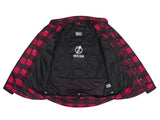
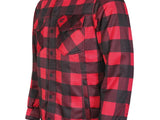
Outrider™ Kevlar® Armoured Flannel Shirt

$249 / $269. EN 17092 Class AA certified. Same size range as the Crosswind™.
The certified sibling. Same Kevlar® and CE armour, in a flannel shell that passes the garment test. Right for 18–28°C mornings, shoulder seasons, and anyone who wants the certificate.
Trade-off: flannel is warmer than mesh. At 38°C in Rockhampton you will wish you had the Crosswind™.
Vanguard™ Kevlar® Armoured Hoodies

From $249. Zip and pullover variants are EN 17092 Class AA certified.
The layer that makes dawn starts, alpine summer and the ride home after dark workable. Pullover has reflective panels and waterproof pockets. What actually protects you in a riding hoodie, and what does not, is in the Kevlar Motorcycle Hoodies guide.
Trade-off: it is a hoodie. Brisbane at 2pm is not its job.
Nullarbor™ textile touring jacket
Vented textile for the multi-day trip where mesh alone cannot cover the weather spread.
Trade-off: heavier and warmer than mesh. On a 40°C day it rides in the tail bag, not on you.
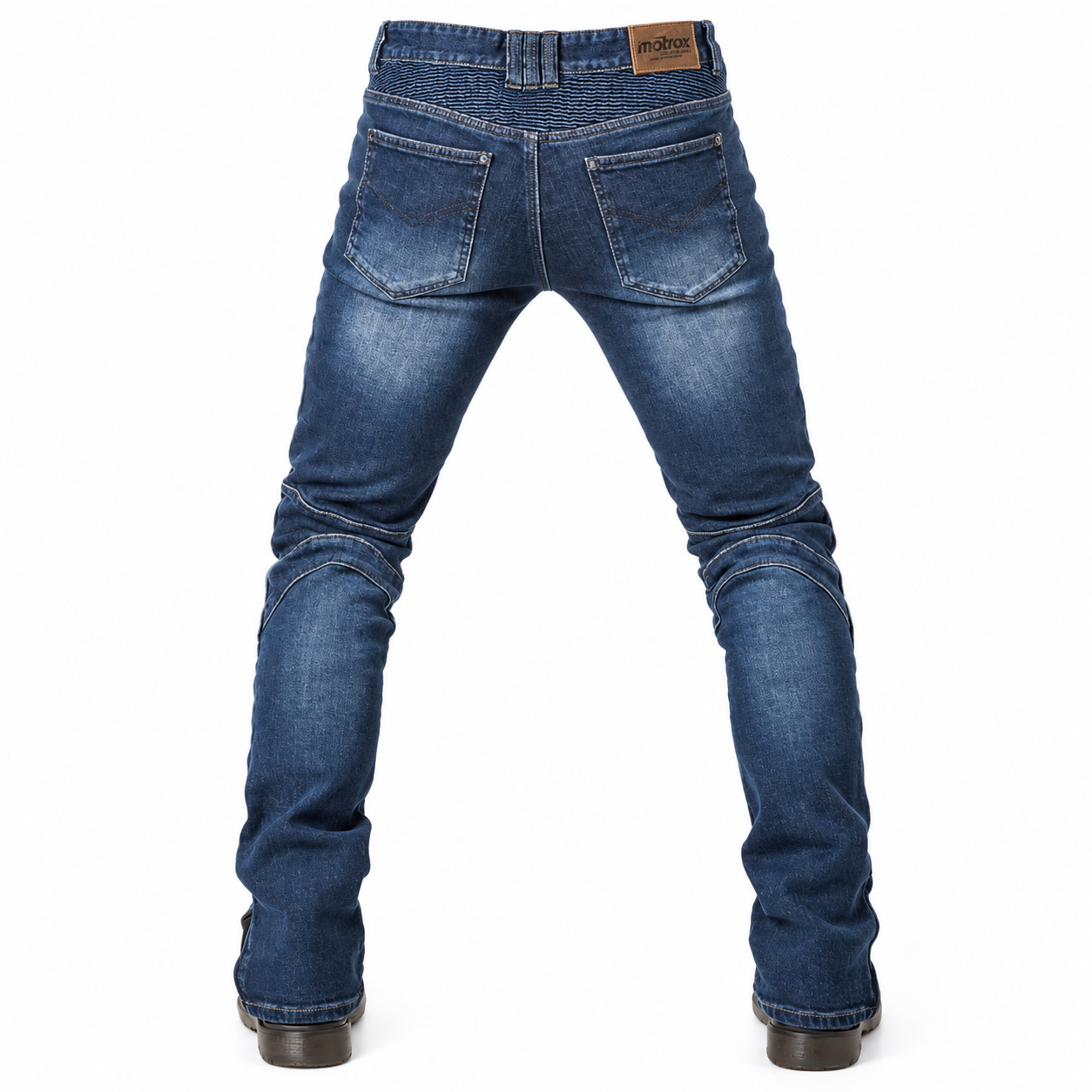
Stockman™ Kevlar® motorcycle jeans
Summer-weight denim with DuPont Kevlar® at hips, seat and knees. The lower half of every stack above. How to choose a pair, and what the AA rating means on jeans, is in the Kevlar Motorcycle Jeans Buyer's Guide.
Trade-off: denim breathes less than mesh overpants. For 40°C touring, add a cooling base layer underneath.
Valkyrie™ women's motorcycle leggings
Cut on a women's pattern, Kevlar® lined, CE armour at hips and knees.
Trade-off: built for commuting and urban riding. Sport and track belong in dedicated leather or textile pants.
FAQ
What should I wear on a motorcycle in Australian summer?
A mesh shirt with CE armour at shoulders, elbows and back, Kevlar®-lined jeans, short perforated gloves, vented boots, a well-vented helmet, and a 2–3L hydration pack. Add a merino base layer everywhere and a phase-change vest anywhere humid. The T-shirt option is not an option.
Is a mesh motorcycle shirt safe?
At city speeds, a mesh shirt with Level 2 armour protects you from the injuries that actually happen in a 50 km/h drop: shoulder, elbow and spine impacts. It is not a substitute for a certified leather or textile jacket at sustained highway speed. Know which ride you are on.
Mesh vs leather vs textile: which is best in Australian heat?
Mesh above 28°C. Textile when the weather might change on you. Leather for sport pace and track. Anyone who tells you one garment does all three is selling that garment.
How do you stay cool riding a motorcycle in 40-degree heat?
Mesh shirt, merino or phase-change base, 1 litre of water per hour with electrolytes, the right cooling vest for your humidity, and the discipline to ride 5–11am and 4–7pm with shade in between. The schedule matters more than any product.
Can you wear a mesh shirt in the rain?
You can, and you will be wet in about four seconds. Mesh is for airflow, not weather. A $150 packable rain shell in the tail bag solves it.
What's the best motorcycle gear for Queensland summer?
Mesh shirt, phase-change cooling vest (evaporative vests do not work above 60% humidity), merino base, Kevlar® jeans, 3L hydration with ice refills, and a rain shell for the 3pm storm.
Do mesh motorcycle shirts have armour?
The ones worth buying do. The Crosswind™ includes CE EN 1621 armour at shoulders, elbows and back in the price. If a shirt at this price charges extra for the back protector, that tells you what the seller thinks of your spine.
How tight should a mesh motorcycle shirt fit?
Close through chest and shoulders, with room at the waist for the armour and the riding crouch. If the armour slides when you tug the shirt, it is too loose. If the mesh is flat against your skin, it is too tight.
What is a Kevlar-lined motorcycle shirt?
A riding shirt with DuPont Kevlar® aramid panels behind the shell at the abrasion zones. Kevlar® holds up in a slide where cotton and denim shred. It does not by itself make the shirt a certified garment under EN 17092.
What's the difference between CE Level 1 and Level 2 armour?
Level 2 transmits roughly half the force of Level 1: 20 kN average versus 35 kN at the shoulder and elbow, 9 kN versus 18 kN at the back. It is thicker and firmer. For anything faster than a 70 km/h commute, pick Level 2.
Is D3O® armour worth it?
For comfort, yes: it is soft until it is hit. For certification, it meets the same CE levels as good foam. It is available on request now on the Crosswind™, Outrider™ and Vanguard™, ahead of the official launch. Ask for it on chat when you order.
What is the best armour for commuting?
Smooth Ways Level 1 or 2 in the Crosswind™. Slim enough to forget about, CE certified at all three positions, and the cheapest route into proper armour.
Can mesh gear be worn in winter?
Not below about 18°C. The holes that cool you in January freeze you in July. Winter is the Vanguard™ hoodie or Outrider™ flannel, or a textile jacket with the liner in.
Does mesh gear last?
Three to five Australian summers for the shell, five to seven years for the armour. UV is the enemy. Dry it in shade and it lasts; leave it on the back veranda and it does not.
How often should motorcycle armour be replaced?
After any crash or hard drop, immediately, even if it looks fine. Otherwise every five to seven years as the foam degrades. The replacement set costs less than one ambulance call-out.
Final Word
Most Australian riders who ride in T-shirts in summer do it because the jacket they own is unbearable above 30°C. That is a gear problem, not a character problem. Fix the gear and the T-shirt argument goes away.
If you only do one thing today: lay a shirt that fits flat, measure it against the size guide, and order the Crosswind™ with the armour that matches your riding from the matrix above. Use MOTROX10 at checkout for 10% off your first order. If the measurements confuse you, the 24/7 chat on motrox.com.au has a person who will sort it in ten minutes.
And if you are the comfort-first type who has been waiting for D3O®, you do not have to wait. Ask for it on chat when you order.
Popular with riders


- CE armour

- CE armour
- Kevlar®

- CE armour

- CE armour
- Made to measure