 Race Suits


 Jackets


 Hoodies


 Shirts


 Pants


 Kids Gear


 Gloves
 Vests


Table of contents
No headings found in this article.
A motorcycle hoodie is the most tempting piece of riding gear there is. It looks like what you already wear, it goes from the bike to the café without a second glance, and on a warm Australian morning it is a lot easier to pull on than a full jacket. The problem is that the word "hoodie" covers everything from a plain cotton sweatshirt with a bike logo to a garment tested to the same European standard as a touring jacket. This guide explains how to tell them apart so you buy the one that will actually hold together when you need it to.
1. Is it fully lined, or just panelled?
Abrasion protection in a riding hoodie comes from an aramid layer, usually branded Kevlar®, sitting under the outer fleece. Some hoodies place aramid panels only at the shoulders, elbows and back. Others line the whole body and sleeves. Panels cover the zones that hit the road first, but a slide rarely stays on one patch of fabric, so a full lining gives you more margin. If a listing does not say where the aramid is, ask before you buy. The Motrox Vanguard™ zip hoodie is fully lined with genuine 220gsm DuPont™ Kevlar® aramid.
2. Look for an EN 17092 rating on the garment, not just the armour
EN 17092 is the European standard for motorcycle riders' protective garments. It tests the complete piece of clothing for impact abrasion, seam strength and tear strength, then assigns a class. Class AAA is the highest and is typical of race leathers. Class AA is the rating for urban and touring garments, and it is the level a serious riding hoodie should reach. Class A is the entry level, and Class B and C cover garments with limited abrasion protection or that carry armour only. A hoodie sold with no class at all has simply not been tested as a garment, whatever the armour inside it says. When a brand quotes a class, it should be able to show the type-examination certificate: the Vanguard's is published on the product page.
3. The armour has its own standard: EN 1621
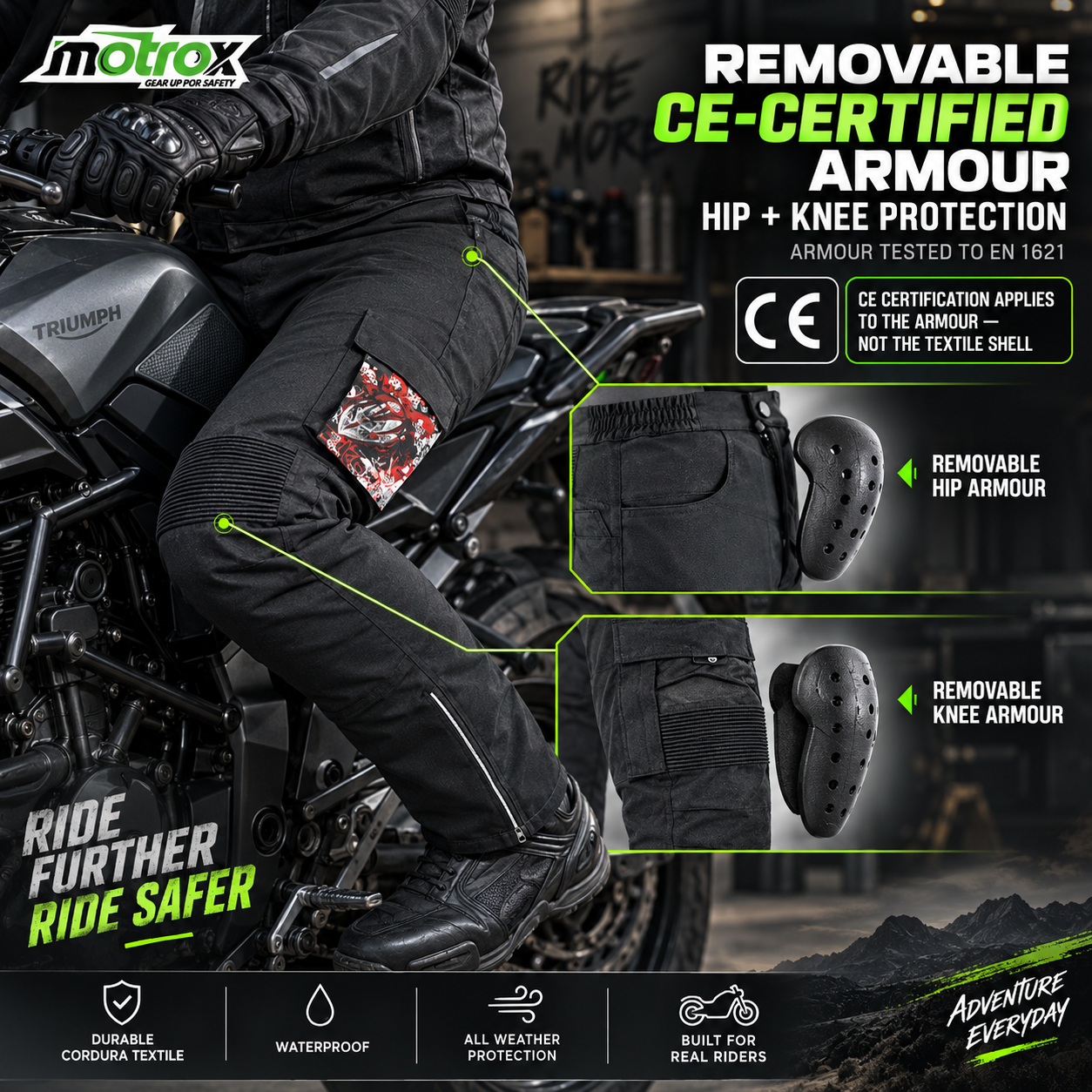
Impact protectors for shoulders, elbows, knees and back are tested separately under EN 1621. Level 1 is the standard rating; Level 2 transmits less force in the test and is the higher rating. On a hoodie you want shoulder and elbow protectors as a minimum, and a back protector pocket you actually use. "CE certified" on a listing should always tell you which standard and which level; if it does not, treat the claim as unverified. All Motrox armour options are CE certified to EN 1621, with a choice of Level 1 or Level 2.
4. Construction details that matter
Seams give way before fabric does, which is why EN 17092 tests seam strength. Four-needle overlock stitching with double reinforcement is the construction to look for. Belt loops at the waist that connect the hoodie to your riding pants stop it riding up in a slide, and a decent zip (YKK is the benchmark) will not burst open on impact. Mesh lining is not a safety feature, but it decides whether you will wear the hoodie in February or leave it on the hook.
5. Fit and sizing: measure, do not guess
Armour only works if it stays over the joint it is protecting, so a riding hoodie should be snugger than a fashion hoodie. Measure your chest at the fullest point and your belly at the widest point, and size by the larger number. Between sizes, the smaller size gives a secure fit and the larger size gives room to move. Riders with long arms should look for tall sizes rather than sizing up. Our hoodie size guide covers regular and tall sizes from XS to 8XL with a worked example.
6. What a riding hoodie is not
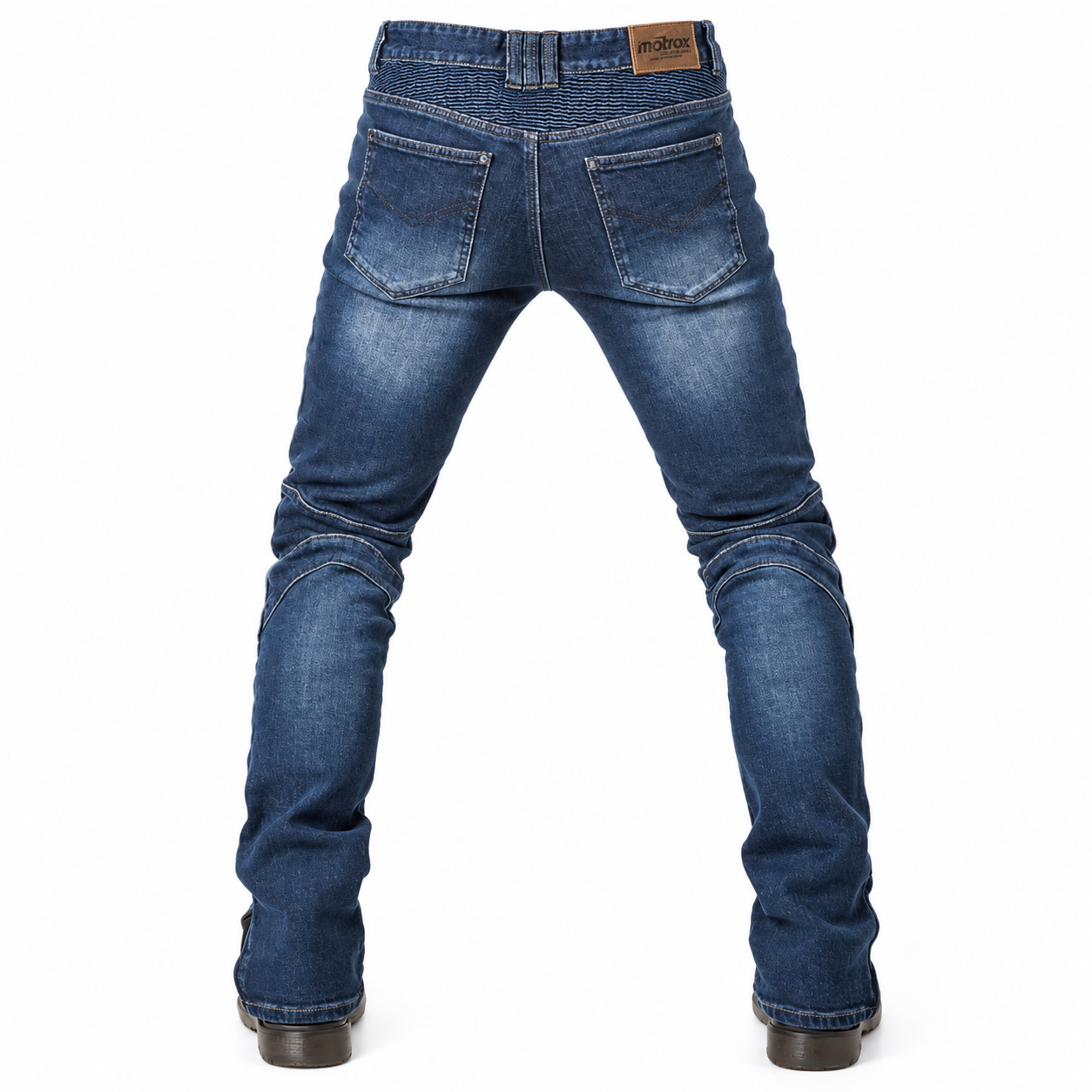
It is not waterproof, even when the pockets are sealed, and it is not a substitute for a jacket at highway speeds on a long day. It is the right layer for the commute, the café run and the Sunday ride where you want to step off the bike and blend in. For longer trips, look at a textile or leather motorcycle jacket, and pair either with Kevlar motorcycle jeans.
The short version
Full aramid lining, an EN 17092 Class AA shell with a certificate you can read, EN 1621 armour at shoulders, elbows and back, reinforced seams, belt loops, and a fit chosen by tape measure rather than habit. Browse the Kevlar motorcycle hoodie range (zip, pullover and water-resistant softshell styles) or compare the three Vanguard™ hoodies side by side, all with free delivery Australia-wide.
When the hoodie is too warm: above about 28°C a mesh shirt takes over. Where each layer fits across an Australian summer, from Darwin to the Snowies, is in Summer Motorcycle Gear in Australia: The Honest Rider's Guide.
Popular with riders


- CE armour

- CE armour
- Kevlar®

- CE armour

- CE armour
- Made to measure